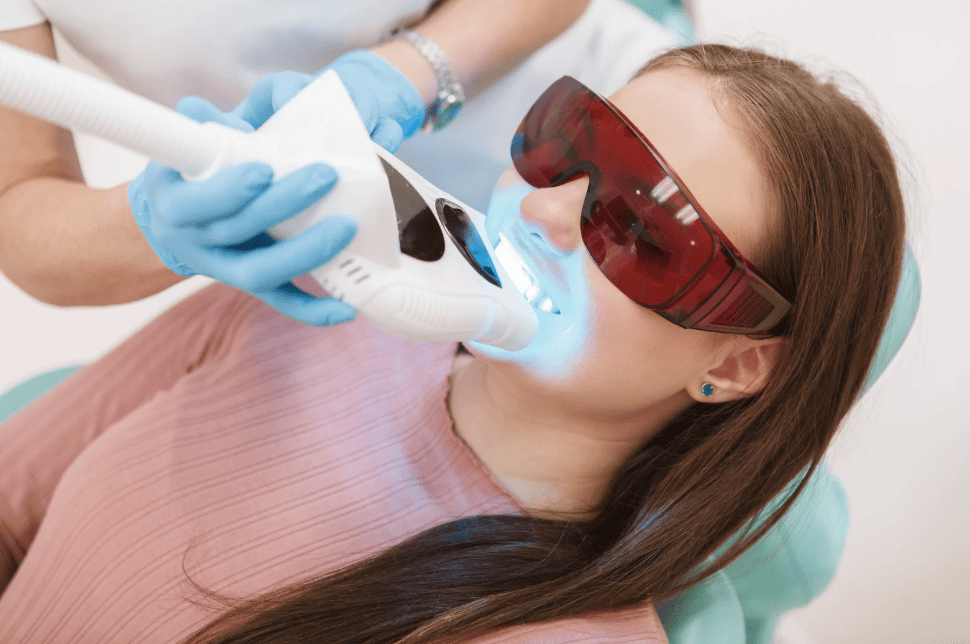
Blue light teeth whitening can lighten natural teeth when used with an appropriate whitening gel. The gel does the bleaching; a light is part of some systems, but does not guarantee a better final result. Suitability, sensitivity and maintenance depend on your teeth and the treatment used.
What is Blue Light Teeth Whitening?
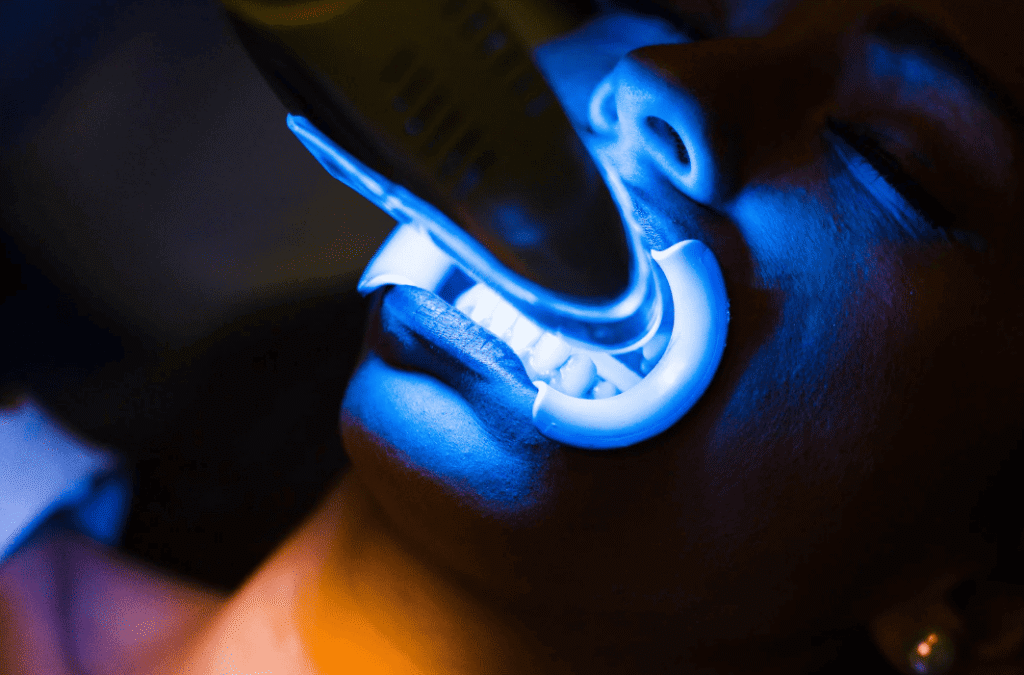
Blue light teeth whitening usually combines a peroxide-based gel with a light source. Hydrogen peroxide, or peroxide released from carbamide peroxide, acts on stain molecules within natural teeth. The role of the light depends on the gel formulation and the system used.
A whitening gel does not necessarily need a lamp to work. Clinical studies comparing the same gel concentration with and without light activation have not consistently found a greater final colour change with light. A blue lamp alone is therefore not a reliable measure of treatment effectiveness.
Does blue light whiten teeth without gel?
An ordinary home blue LED should not be treated as a substitute for whitening gel. A product claiming to whiten without gel needs clinical evidence for that particular device and protocol. Results from other wavelengths or professional systems cannot simply be applied to it.
Removing surface stains is also different from bleaching natural tooth colour. Cleaning and polishing may address surface deposits, while bleaching uses active ingredients. Our teeth whitening service page explains the options available at the clinic.
Is Blue Light Teeth Whitening Effective? Why Is It Worth Choosing?
An appropriate whitening treatment can lighten natural teeth, but the amount of change varies. Your starting shade, the cause of discolouration and any visible fillings or crowns matter more than a promised number of shade steps.
Which stains may respond?
Some yellow-toned discolouration and staining associated with food, drinks or smoking may improve. Surface deposits may first need cleaning rather than bleaching. Tetracycline staining and fluorosis need individual assessment; one appointment cannot be assumed to resolve them.
Are home LED whitening kits effective?
The active ingredient, concentration, contact with the teeth and instructions all matter. A dentist-prescribed tray system is different from a retail LED kit. Do not add more gel, extend exposure or combine products to try to accelerate the result.
Is a blue-light toothbrush the same as whitening treatment?
No. Toothbrushes and toothpastes support everyday cleaning, and some products help remove surface stains. That does not establish the same change in natural tooth colour as bleaching. Claims about a particular product need evidence for that product.
Blue Light Teeth Whitening Process
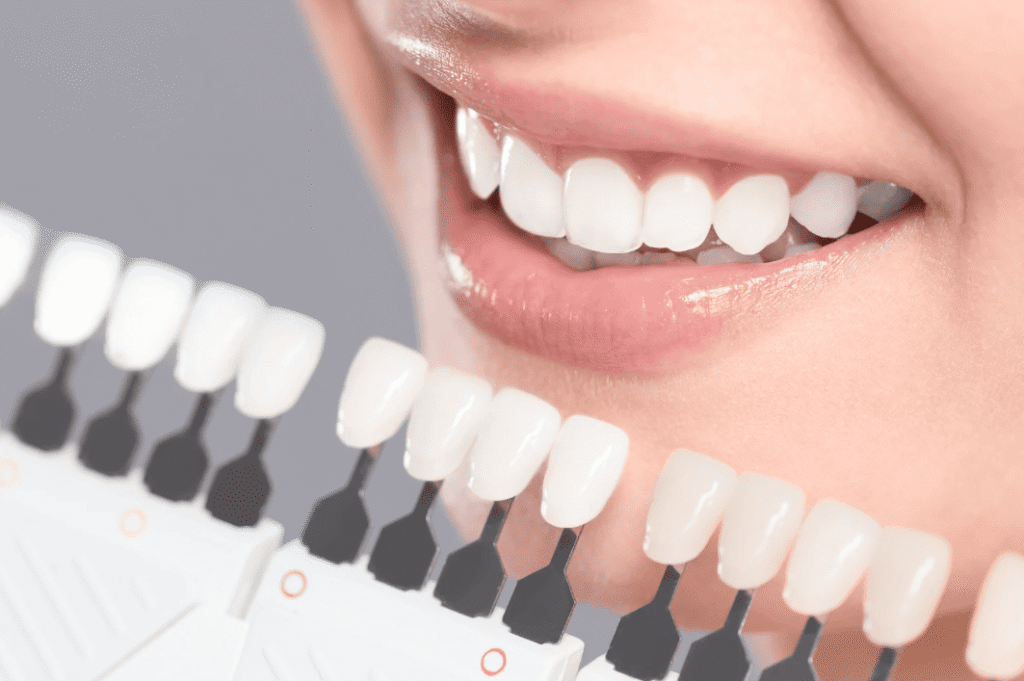
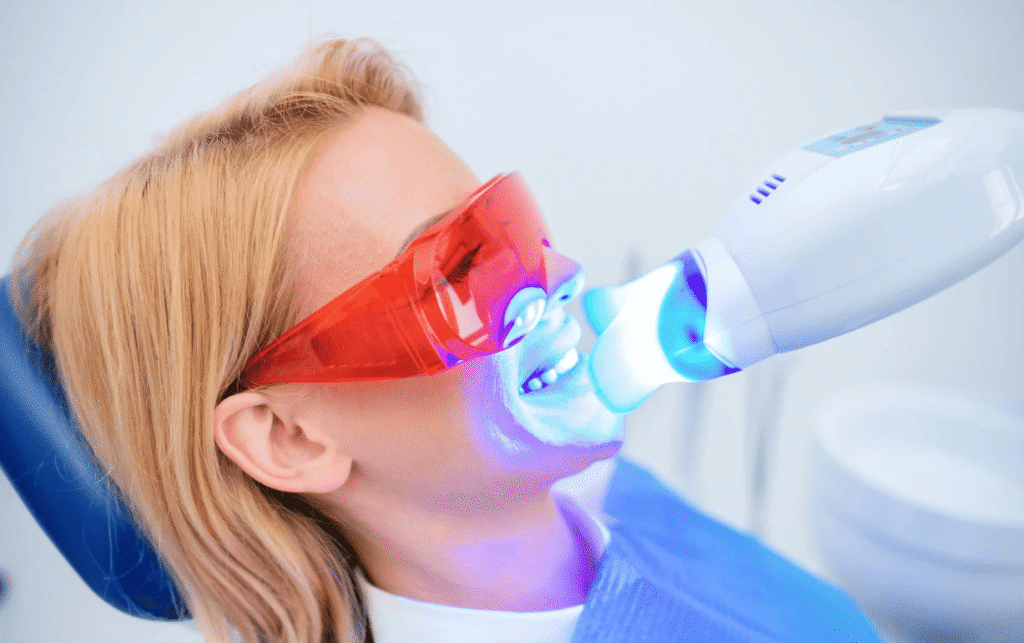
In-clinic whitening usually involves an examination, protection of the gums, gel application and an aftercare discussion. The number of cycles, contact time and use of light depend on the system and your dentist’s assessment.
- Examination and shade record: Your dentist checks the cause of discolouration, previous whitening, sensitivity, restorations and the health of your teeth and gums.
- Cleaning or preliminary treatment if needed: Tartar, gum inflammation or decay may need attention first. Cleaning and whitening do not have to happen on the same day for every patient.
- Soft-tissue protection: The gums and lips are protected as required. Appropriate eye protection is used when a light is part of the procedure.
- Gel and system application: The gel and any required light are used according to the treatment protocol. Your dentist monitors discomfort and may adjust or stop treatment.
- Review and aftercare: The gel is removed, the mouth is checked and you receive advice about sensitivity and further assessment.
How long should I allow?
Diestel & Partners’ current whitening service information lists approximately two hours. This is an appointment-planning reference, not continuous light exposure. The system chosen, examination, cleaning or preliminary treatment can change the schedule; confirm it when booking.
What happens afterwards?
Follow the instructions for your treatment and continue brushing with fluoride toothpaste and cleaning between your teeth. Coffee, tea and smoking can affect tooth colour over time. Dietary restrictions and touch-up schedules for one system should not be assumed to apply to every whitening product.
Who is Suitable for Blue Light Teeth Whitening?
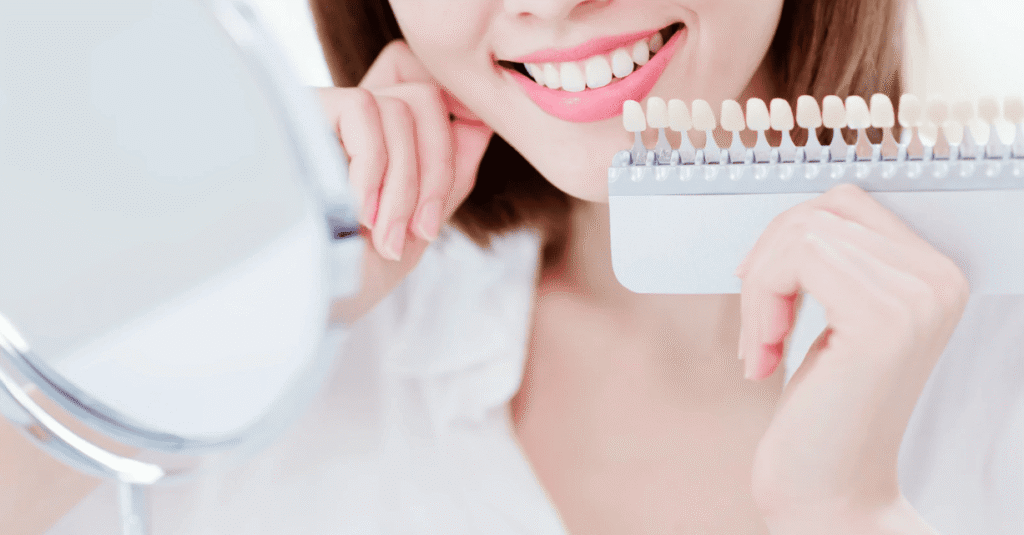
Suitability depends on oral health and whether bleaching can address the cause of discolouration. Discuss your goals at an examination before deciding which light or gel to use.
- Decay, inflamed gums or significant sensitivity: Find and treat the cause before starting whitening.
- Exposed roots, cracks or substantial wear: These may affect comfort or the result and need individual assessment.
- Visible crowns, veneers or fillings: Restorative materials do not bleach like natural teeth. A colour mismatch may become noticeable; replacement is not automatically required.
- Pregnancy or breastfeeding: Safety information is limited, so elective cosmetic whitening is generally deferred. Discuss timing with your dentist.
- Children and teenagers: A dentist should assess discolouration and dental development rather than using an adult whitening regimen without advice.
- Previous allergy to a gel ingredient: Tell your dentist before treatment and avoid trying the product again yourself.
Side effects and when to stop
Temporary sensitivity and gum irritation can occur; using blue light does not make treatment pain-free or risk-free. Stop a home product and contact your dentist if it causes marked pain, burning or sore areas on the gums. Persistent, worsening or single-tooth sensitivity also needs assessment rather than further whitening or simply adding sensitivity products.
Where to Get Blue Light Teeth Whitening in Hong Kong? Key Considerations for Choosing a Clinic
Compare the examination, treatment explanation, fees and follow-up arrangements. Lamp colour, an advertised shade change or the price alone cannot establish whether a treatment suits you.
- Who assesses and follows up your care? Confirm the responsible dentist, the clinic’s contact details and what to do if sensitivity develops.
- Which system will be used? Ask whether the gel and light are designed to work together, and why that approach fits your teeth.
- What does the fee include? Check whether examination, cleaning, in-clinic treatment, take-home trays and reviews are charged separately. Your fee is confirmed after assessment.
- What are the limitations? Discuss restoration colour, possible sensitivity and how future touch-ups would be decided.
How long do results last, and how often should whitening be repeated?
Whitening is not a permanent colour change. Results may fade over months or years, depending on the starting shade, treatment, smoking, diet and oral care. The presence of a blue light does not predict how long your result will last.
Touch-ups should be based on colour change, sensitivity and oral health, rather than an automatic six-monthly or yearly schedule for everyone. Multiple applications within an initial course are different from a later maintenance treatment. Use prescribed home gel for the instructed course, not indefinitely.
Comprehensive Comparison: Blue Light Teeth Whitening vs. Other Whitening Methods
Compare the active ingredients, delivery method and follow-up support. “Blue light” and “cold light” can be overlapping descriptions of light-assisted systems, rather than separate treatment categories with predictable differences in price, strength or longevity.
| Method | How it is used | What to consider |
|---|---|---|
| In-clinic whitening, sometimes with blue light | Gel and equipment are used according to the system after dental assessment. | Soft-tissue protection and monitoring are available; sensitivity and variable results remain possible. |
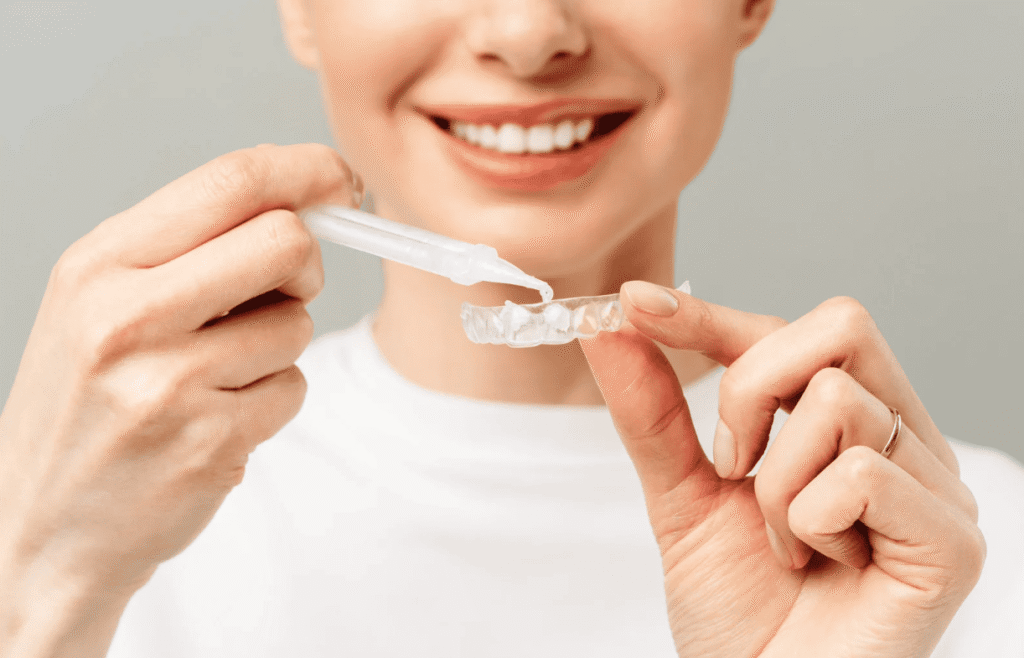
| Dentist-prescribed home whitening | Custom trays and gel are used over the prescribed course. | Follow the daily wear time and course length; do not increase the dose yourself. |
| Retail LED kits or whitening strips | Ingredients, concentration and tooth contact vary between products. | An LED alone does not establish effectiveness. Decay or sensitivity should be assessed first. |
| Whitening toothpaste and daily cleaning | Primarily help reduce surface stains. | Not equivalent to bleaching intrinsic tooth colour or a substitute for dental checks and professional cleaning. |
Conclusion
Choosing whitening starts with the cause of discolouration, the proposed gel and treatment plan, and potential sensitivity or colour mismatch with restorations. A dental assessment helps you compare in-clinic and prescribed home options with realistic expectations.
Read about teeth whitening in Central at Diestel & Partners, or use our contact and appointment page to arrange an assessment.
Frequently Asked Questions
Is blue light teeth whitening effective?
An appropriate whitening gel can lighten natural teeth, but the result depends on the cause of discolouration, the formulation and your teeth. Light is part of some systems; its presence does not guarantee a greater shade change.
Does blue light whiten teeth without gel?
An ordinary home blue LED should not be treated as a substitute for whitening gel. A gel-free device needs clinical evidence for that specific product and protocol, rather than results borrowed from other light sources or professional systems.
Are LED teeth whitening kits effective?
Assess the active ingredient, concentration, tooth contact and instructions, not just the LED. Dentist-prescribed home whitening and retail kits have different arrangements. Do not increase doses, extend exposure or mix products yourself.
Does blue light teeth whitening hurt?
Sensitivity or gum irritation can occur during or after treatment, so a pain-free experience cannot be guaranteed. Stop self-applied whitening and contact your dentist if discomfort is marked, persistent or worsening.
How long do blue light whitening results last?
Whitening is not permanent. Results may fade over months or years depending on the treatment, starting shade, diet, smoking and oral care. The use of blue light alone does not predict longevity.
How often should you whiten your teeth with blue light?
The initial course and later touch-ups depend on discolouration, the system and sensitivity. A six-monthly or yearly treatment is not appropriate for everyone. Home gel should not be used continuously without a prescribed course.
How long should I use blue light for teeth whitening?
Light exposure is different from total appointment time and must follow the matching gel and device instructions. Diestel & Partners lists approximately two hours for whitening appointments as a reference; confirm your own schedule with the clinic. Do not extend light exposure yourself.
Will crowns, veneers or fillings whiten too?
Restorations do not bleach like natural teeth, so a colour mismatch can become more noticeable. Your dentist will assess their position and shade before discussing any changes. Replacement is not automatically necessary.