

Braces (Orthodontics)
Diestel & Partners is a family-friendly dental practice in the heart of Central Hong Kong — the kind of place where patients who first came to us as children now bring their own children. Many of our staff have been with us for years, and our patients keep coming back for the personalised care that larger practices rarely offer. We provide braces and orthodontic treatment for children and adults from start to finish in one familiar place; for specialist orthodontic services, our patients also have access to our sister clinic, Smith & Jain.
Table of Contents
Your Braces Dentist
Your orthodontic care at Diestel Partners is led by Dr Kay S. Chan, a general dentist whose practice is restricted to orthodontics, supported by Dr. Ailsa Tam for coordination and general dental needs. For complex cases needing specialist input, we can also draw on our sister clinic, Smith & Jain Dentists.

Dr Kay S. Chan
General Dentist (Practice Restricted to Orthodontics)
Brace Orthodontics, Dental Surgeon
Speaks: English
Braces Are About More Than Looks
It’s easy to think of braces as purely cosmetic, but straight teeth matter for long-term health too. Once teeth are better aligned, a toothbrush and floss can reach every surface more easily, helping to reduce decay and gum problems. A corrected bite also improves how you chew and reduces uneven wear on individual teeth. For many patients, orthodontic treatment is a long-term investment in both confidence and oral health.
Why an Early Assessment Helps for Children
While baby and adult teeth are still changing (often around ages seven to ten) and the jaw is still developing, teeth can usually be guided into position more readily — and for some cases the overall treatment may be shorter than starting as an adult. That’s why we encourage parents to arrange an assessment during a child’s growing years, so the dentist can advise whether treatment is needed and the best time to begin. Making the most of these developmental years often means an easier path later on.
What to Expect With Braces at Diestel
Typical framework: monthly check-ups over roughly 1–2 years (the actual timeline varies from person to person).
- Assessment and referral — one of our dentists first examines you or your child to decide whether orthodontic treatment is needed. Orthodontics is generally led by an orthodontic specialist; where appropriate, we arrange the referral and appointment for you.
- Clinical exam and records — we take the necessary dental X-rays and images and perform an intraoral scan to understand the teeth and jaw, and address any other dental issues (such as decay or gum concerns) before treatment begins.
- A plan built around you — the dentist explains the suitable appliance, the expected outcome and the rough timeline, so you know what’s involved before you start.
- Fitting the braces — placing the chosen appliance on your teeth takes about an hour.
- Regular adjustments — you then return roughly once a month so the dentist can check progress and adjust the appliance, keeping treatment on track.
- Completion and retainer — once treatment is finished the braces are removed, and a retainer is worn for a period to stop the teeth drifting back over time.
Types of Braces at a Glance
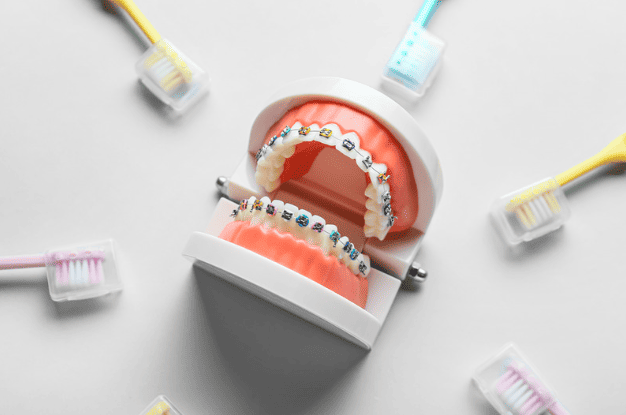
- Fixed braces (metal or ceramic): the most common appliance, suited to more noticeable crowding or alignment problems in children and adults; ceramic braces are tooth-coloured and less visible than metal.
- Removable braces: suited to children with a mix of baby and adult teeth whose jaw is still developing.
- Functional appliances: used to guide jaw growth, mainly in developing children.
Clear aligners (Invisalign)
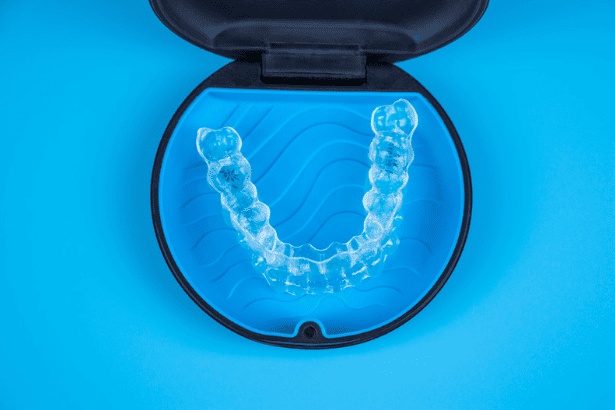
If you have mild to moderate alignment issues and want a near-invisible option, Invisalign clear aligners may suit you. For how they work, how they’re worn and who they’re for, see our dedicated page: Invisalign — Clear Aligners →

About the Cost of Braces
Orthodontic treatment is highly individual — every patient’s teeth and complexity differ — so we can’t give an accurate quote before an in-person clinical examination. The overall cost mainly depends on how complex the case is, the type of appliance chosen, and the length of treatment. At your consultation we’ll set out the treatment plan and the associated fees clearly, so you know what to expect before starting. For a general sense of fee ranges across common dental treatments in Hong Kong, ask us for the group’s fee-reference information.
Book Your Braces Consultation
Wondering whether you or your child is suitable for braces? Book a consultation at Diestel & Partners in Central and let our team assess your needs and recommend a suitable orthodontic plan.
Frequently Asked Questions
What's the best age to start braces?
There’s no single set age. Children treated while their teeth are still changing and the jaw is developing can often have teeth guided into place more easily, and some cases may be shorter — but adults can have braces too. The best approach is an early assessment so the dentist can advise on timing.
How long does braces treatment take?
Most treatment runs about 1–2 years with monthly adjustments, depending on the complexity of the case, how far the teeth need to move, and how closely instructions are followed. A retainer is worn for a period afterward.
What's the difference between braces and Invisalign?
Fixed braces suit more noticeable or complex alignment problems and offer comprehensive control; Invisalign clear aligners are near-invisible and removable, and tend to suit mild to moderate cases and those focused on appearance. Which is right for you is determined by the dentist — see our Invisalign page for more.
Do braces hurt?
For a few days after fitting or each adjustment, teeth may feel tender or under pressure — this is normal and usually settles within a few days. Your dentist can advise on staying comfortable through the adjustment period.
Do I really need a retainer after the braces come off?
Yes. Teeth tend to drift back over time, and a retainer helps hold the result. It’s an important final step of treatment, so it shouldn’t be skipped.